Going viral on TikTok is not random. It might look that way from the outside — a random person films a 45-second video and suddenly has 5 million views. But when you study what actually goes viral, clear patterns emerge. Patterns that any creator, regardless of follower count or production budget, can learn and apply.
TikTok's algorithm is the great equalizer. It does not care about your follower count, your production quality, or whether you have been on the platform for five years or five days. It cares about one thing: how viewers respond to your content. That singular focus on audience behavior is what makes TikTok the most meritocratic social platform in existence, and it is why understanding the algorithm is the single most important step toward going viral.
This guide breaks down exactly how TikTok decides what goes viral in 2026, the specific techniques creators use to engineer virality, and the strategic framework you need to maximize your chances of creating a breakout video.
Key Takeaways
- Watch-through rate is the most important metric. TikTok prioritizes videos that keep viewers watching until the end over videos with high like counts but low completion rates.
- The first three seconds determine your video's fate. If viewers scroll past in the opening moments, the algorithm stops distributing your content entirely.
- Emotional resonance drives sharing. Videos that trigger surprise, relatability, amusement, or inspiration get shared at significantly higher rates than neutral content.
- Trending sounds provide built-in distribution. Using trending audio gives your video an algorithmic boost, but only if you add a unique angle that stands out from other creators using the same sound.
- Consistency compounds results. Posting 3-5 times per week gives you more chances to hit the algorithm's sweet spot and builds the momentum that leads to viral moments.
- Edutainment is the dominant format in 2026. Content that educates while entertaining produces the most consistent viral results across every niche.
How Does TikTok's Algorithm Decide What Goes Viral?
Every video you post gets shown to a small test audience — typically a few hundred people selected from users who have shown interest in content similar to yours. Based on how that initial group responds, TikTok either stops distributing the video or pushes it to progressively larger audiences in a cascading sequence that can reach millions.
This distribution system operates in tiers. Your video first reaches a small pool of 200-500 viewers. If engagement signals meet TikTok's thresholds, it gets pushed to 1,000-5,000 viewers. Strong performance there leads to 10,000-50,000, then 100,000-500,000, and so on. At each tier, TikTok re-evaluates performance before deciding whether to continue pushing the video to a larger audience.
The signals the algorithm weighs most heavily in 2026:
- Watch-through rate — The percentage of viewers who watch your entire video. This is the single most important metric. A video with 80% completion will get pushed further than one with 15% completion, regardless of total views. TikTok's entire business model depends on keeping users on the app, so content that keeps people watching is exactly what the platform wants to promote.
- Rewatch rate — How many viewers watch your video more than once. Content that rewards rewatching gets massive algorithmic boosts. When TikTok detects that users are looping your video, it interprets this as an exceptionally strong quality signal because users are voluntarily choosing to spend additional time on your content.
- Shares — When someone sends your video to a friend or shares it to their story, that is the strongest signal that your content is valuable. Shares extend your reach beyond TikTok's algorithmic distribution because each share introduces your content to a entirely new social circle that may never have seen it otherwise.
- Comments — Not just volume, but conversation. Videos that spark debate or emotional responses get pushed further. TikTok also measures comment velocity — how quickly comments accumulate after posting. A surge of comments in the first 30 minutes is a powerful distribution trigger.
- Saves — People save content they want to reference later. High save rates indicate lasting value, which TikTok rewards because saved content keeps users returning to the platform.
- Profile visits after viewing — When a viewer watches your video and then visits your profile, TikTok interprets this as a strong interest signal. Videos that drive profile visits tend to receive extended distribution.
TikTok's algorithm in 2026 optimizes for durable attention, not vanity likes. A video with fewer likes but high completion and rewatches will outperform a video with tons of likes but low watch time.
How Does TikTok's "For You" Page Selection Actually Work?
The For You page is where viral videos are born. TikTok's recommendation engine uses a combination of user interaction history, video information (captions, sounds, hashtags), and device/account settings to determine what appears on each user's feed. When your video enters distribution, TikTok matches it against user interest profiles built from thousands of previous interactions.
What makes TikTok unique among social platforms is that follower count has almost no bearing on For You page distribution. A brand new account with zero followers can reach millions of viewers if the content triggers the right engagement signals. This is fundamentally different from Instagram or YouTube, where existing audience size heavily influences organic reach.
TikTok also clusters content into micro-communities based on viewing behavior. If your video performs well among a specific interest group — say, home cooks interested in budget meals — the algorithm will test it with adjacent interest groups, like meal preppers and grocery shopping enthusiasts. This cross-pollination between communities is often how videos break from niche success into mainstream virality.
What Is the 3-Second Rule and Why Does It Matter?
The most critical moment of any TikTok video is the first three seconds. If viewers scroll past in that window, the algorithm marks your video as low-interest and stops distributing it. Your hook determines whether anyone ever sees the rest of your content. In practical terms, your opening three seconds are more important than the entire remaining length of your video combined.
Data from TikTok's creator analytics dashboard consistently shows that videos losing more than 60% of viewers in the first three seconds almost never achieve meaningful distribution. Conversely, videos that retain 70% or more of viewers through the first three seconds are dramatically more likely to enter TikTok's higher distribution tiers.
Hooks that work consistently in 2026:
- "Stop doing this..." — Creates immediate fear of missing out on important information. This hook works because it implies the viewer is currently making a mistake, which triggers an urgency response that prevents scrolling.
- "I tested [thing] for 30 days" — People want to see the result. This format has proven remarkably durable because it promises a concrete payoff that satisfies curiosity. Viewers stay because they want to know if it actually worked.
- "Nobody talks about this" — Implies insider knowledge. This hook leverages the human desire for exclusive information. It positions the viewer as gaining access to something most people miss.
- Visual shock — Start with the most interesting visual moment, not a slow buildup. Show the finished transformation, the shocking result, or the unexpected outcome first, then explain how you got there. This inverted structure hooks viewers with the payoff immediately.
- Direct address — "If you're a [specific person], watch this" immediately qualifies the viewer and makes them feel targeted. When someone hears their exact situation described, they feel compelled to continue watching because the content was made specifically for them.
- The contrarian take — "Everyone says [common advice], but that's actually wrong." Challenging conventional wisdom creates cognitive tension that viewers need to resolve by watching the explanation.
- The before/after tease — Start with the impressive "after" result and let viewers know they are about to see how it happened. Transformation content consistently ranks among the highest-retention video types on TikTok.
The common mistake is burying the hook. Do not start with "Hey guys, so today I wanted to talk about..." Start with the payoff. Start with the result. Start with the thing that makes someone stop scrolling. Every word before your actual hook is costing you viewers — and once they are gone, the algorithm marks your video as low-interest permanently.
How Do You Test Different Hooks Effectively?
Elite TikTok creators often film multiple hook versions for the same video. They will record three different opening lines, post the version they think is strongest, and if the video underperforms, delete it and repost with a different hook. This is not cheating — it is strategic testing.
To test hooks systematically, keep a hook swipe file. Every time you see a video that stops your scroll, write down the first sentence or visual. After a month, you will have dozens of proven hook structures you can adapt for your own niche. Pattern recognition is the fastest way to improve your hooks.
How Do You Optimize for Watch Time and Retention?
Getting someone to stop scrolling is step one. Keeping them watching until the end is step two — and it is where most creators fail. TikTok's retention analytics show that the average video loses 30-40% of its audience within the first five seconds, even after the initial hook. Maintaining attention throughout the entire video requires deliberate structural choices.
Tactics that improve retention:
- Use quick cuts — Eliminate pauses, "um"s, and dead space. Each sentence should flow directly into the next. Professional editors on TikTok often cut every 1.5-3 seconds, creating a rhythm that keeps the brain engaged by providing constant visual novelty.
- Stack the value — If you are listing tips, make each one genuinely useful. Do not pad with filler to hit a target length. Viewers can sense when content is stretched thin, and they will drop off at the first sign of diminishing returns.
- Build toward a payoff — Structure your video so the most interesting or surprising moment is near the end. Give people a reason to stay. This is sometimes called the "payoff structure" — the viewer knows something good is coming and stays to see it delivered.
- Add on-screen text — Text overlays keep visual attention engaged, especially when viewers are watching without sound. Multiple information streams (audio, visuals, and text) create a richer experience that is harder to look away from.
- Use the loop trick — End your video in a way that connects seamlessly to the beginning. Seamless loops encourage rewatches without the viewer even realizing it, which dramatically boosts your completion and rewatch metrics.
- Stack open loops — Tease upcoming information throughout the video. Saying "and the third tip is the one that changed everything" early in the video creates an open loop that viewers feel compelled to close by watching to the end.
- Change the visual pattern — About halfway through your video, switch something up. Change camera angles, locations, or visual style. This pattern interrupt re-captures drifting attention and gives the viewer's brain a fresh stimulus to process.
What Is the Ideal TikTok Video Length in 2026?
Data from early 2026 shows that videos between 38-47 seconds achieve the highest completion rates. They are long enough to deliver real value but short enough to maintain attention. The sweet spot varies slightly by niche — educational content can sustain attention for 60-90 seconds, while entertainment content tends to perform best at 15-30 seconds.
That said, the right length depends on your content. A compelling 90-second story will outperform a thin 40-second tip. TikTok has also been testing and promoting longer content formats, with some creators finding success with 2-3 minute videos when the content genuinely warrants the length. The principle is not "shorter is always better" but rather "every second must earn its place."
When analyzing your own analytics, pay close attention to your average watch time as a percentage of total length. If your 60-second videos average 35 seconds of watch time (58% completion), you might get better algorithmic results by tightening them to 45 seconds, which could push completion to 75% or higher.
How Should You Use Trends to Go Viral on TikTok?
Trending sounds, formats, and topics get built-in algorithmic boosts. When TikTok detects a trending audio or format, it pushes videos using that trend to more For You pages. Using trends is one of the most reliable ways to go viral on TikTok, but there is a catch: you need to add something original.
Simply replicating a trend exactly as everyone else does it will not make you stand out. The trend provides distribution; your unique angle provides the reason for viewers to engage, share, and follow. The creators who go viral from trends are the ones who use the format as a vehicle for their own niche expertise or perspective.
The framework for using trends effectively:
- Spot a trend early — Check the Discover page and Creative Center daily. Watch what formats are gaining momentum. The biggest returns come from being among the first 5-10% of creators to use a trend, before it reaches saturation.
- Filter through your niche — Ask: "Can I connect this trend to my topic in a way that feels natural?" If the connection is forced, skip the trend. Forced trend participation feels inauthentic and can actually hurt your brand.
- Add your unique angle — The trend provides the format; your expertise provides the content. A finance creator using a cooking trend format to explain compound interest is adding a unique angle. A finance creator doing the exact same cooking trend as everyone else is not.
- Act fast — Trend windows are short. A trending sound that was hot on Monday might be stale by Friday. The lifecycle of most TikTok trends in 2026 is 5-10 days from emergence to saturation. Speed matters.
- Batch your trend content — When you spot a promising trend, create 2-3 variations using it. Post the strongest version first, and if it gains traction, post the second variation 24-48 hours later to ride the wave.
Do not chase every trend. The creators who go viral most often are the ones who selectively use trends that align with their content, not the ones who jump on every trending sound regardless of relevance. A focused approach to trend participation builds a coherent brand identity while still benefiting from trend-driven distribution.
How Do You Find Trending Sounds Before They Peak?
The TikTok Creative Center is the most reliable tool for identifying trends early. It shows rising sounds, hashtags, and formats with real-time data on growth trajectory. Look for sounds that are growing rapidly but have not yet reached millions of uses — this is the sweet spot where the algorithmic boost is active but the format is not yet saturated.
Another technique is to follow trend-spotting accounts and creators in your niche who have a track record of early trend adoption. When you see multiple established creators in your space using the same format within a 48-hour window, that is usually a signal that the trend has legs.
You can also identify emerging trends by paying attention to your own For You page. If you see the same format or sound three or more times in a single browsing session, it is likely trending or about to trend. Trust your pattern recognition.
What Emotional Triggers Make TikTok Videos Go Viral?
Viral content almost always triggers a strong emotional response. Across millions of viral videos analyzed by social media researchers, a consistent pattern emerges: the videos that spread furthest are the ones that make people feel something intense enough to take action — whether that action is sharing, commenting, or rewatching.
The most effective emotional triggers for TikTok virality:
- Surprise — Unexpected information, plot twists, or outcomes. The brain releases dopamine when confronted with unexpected positive information, which creates a neurological reward loop that viewers want to share with others. Videos with genuine surprise moments get shared at rates 2-3x higher than videos without them.
- Relatability — "I thought I was the only one" moments. Relatable content goes viral because sharing it becomes an act of self-expression. When someone shares your video with "this is literally me," they are using your content to communicate something about their own identity to their social circle.
- Amusement — Genuine humor, not forced comedy. Humor is the most universally shareable emotion. Funny videos cross demographic and interest boundaries in ways that informational or inspirational content often cannot. The key distinction is between authentic, observational humor and try-hard comedy — audiences can tell the difference instantly.
- Outrage — Controversial opinions or exposing wrongdoing. Outrage is a powerful viral trigger, but it should be used carefully. Content that generates outrage drives high engagement through comments and shares, but it can also attract negative attention and brand-damaging associations. Use outrage only when you have a genuine, well-reasoned position to defend.
- Inspiration — Transformation stories, underdog wins, acts of kindness. Inspirational content triggers the "elevation" emotion, which research shows is one of the strongest motivators for sharing. People share inspirational content because it makes them feel good and positions them as a source of positivity in their social networks.
- Nostalgia — References to shared cultural experiences, childhood memories, or "remember when" moments. Nostalgia is a particularly effective trigger because it creates an instant emotional bond between the creator and viewer based on shared experience.
- Curiosity — Content that poses a question or presents a mystery that the viewer cannot resist resolving. Curiosity-driven content achieves high completion rates because the viewer stays until the answer is revealed.
When planning content, ask: "What will someone feel after watching this?" If the answer is "nothing," it will not go viral. The videos people share are the ones that make them feel something strong enough to send it to a friend.
When Is the Best Time to Post on TikTok?
While content quality matters more than posting time, timing still influences your initial engagement — which is what the algorithm uses to decide if your video deserves wider distribution. The first 30-60 minutes after posting are critical, because that is when TikTok's algorithm evaluates your video's performance with its initial test audience.
Posting when your target audience is most active gives your video the best chance of strong initial engagement:
- Morning window (7-9 AM): People checking their phones during their morning routine. This window works well for educational and motivational content.
- Lunch window (12-3 PM): Break-time browsing. Content that provides a mental escape — humor, entertainment, lifestyle — performs well in this window.
- Evening window (7-11 PM): The highest-volume browsing period. This is when the most users are active, making it the best general-purpose posting time. However, competition for attention is also highest.
These are general guidelines. Your specific audience may have different peak times depending on their time zone, age demographic, and daily routine. Use TikTok's analytics (available for business and creator accounts) to identify when your followers are most active.
How Often Should You Post on TikTok?
Post 3-5 times per week minimum. Each post is another lottery ticket. More quality content means more chances to hit. Some successful TikTok creators post daily or even multiple times per day, but quality should never be sacrificed for quantity. Three excellent videos per week will outperform seven mediocre ones.
When managing a multi-platform presence, maintaining a consistent TikTok posting schedule alongside other platforms can be challenging. Tools like cross-post help creators manage their publishing schedule across TikTok, Instagram, YouTube, and other platforms from a single dashboard, which makes it significantly easier to maintain the posting frequency that TikTok's algorithm rewards.
Do not delete underperforming videos. TikTok's algorithm can resurface old content days or even weeks later. A video that got 200 views on day one can suddenly be picked up by the algorithm and pushed to 100,000 viewers if TikTok identifies a new audience segment that resonates with it. Deleting underperforming content eliminates this possibility entirely.
How Should You Use Hashtags and Captions on TikTok?
Hashtags help TikTok categorize your content and show it to relevant audiences. The optimal approach in 2026 has shifted from the early days of the platform — keyword-rich captions have become as important as hashtags themselves, because TikTok now uses natural language processing to understand video content from caption text.
The current best practices:
- Use 3-5 hashtags per video. More than five dilutes the signal and can look spammy. Fewer than three may limit discovery.
- Mix hashtag sizes. Include one broad hashtag (#cooking with millions of posts), one mid-size hashtag (#mealprep with hundreds of thousands), and one or two niche tags (#collegecooking with tens of thousands). This gives you both broad reach and niche relevance.
- Include keywords in your caption that people might search for. TikTok's search function has grown significantly, and many users now discover content through search rather than just browsing the For You page. Write captions that include the phrases your target audience would type into the search bar.
- Write captions that add context or create curiosity — do not waste them on emojis alone. A caption like "This technique saved me 3 hours every week" adds a layer of curiosity that increases both click-through and completion rates.
- Avoid banned or shadowbanned hashtags. Some hashtags have been flagged by TikTok and using them can reduce your distribution. Check whether a hashtag has recent, visible posts before including it.
Does TikTok SEO Actually Matter?
Yes, and it is becoming increasingly important. TikTok has evolved from a pure entertainment feed into a search platform. Studies show that a significant percentage of Gen Z users now use TikTok as a search engine for product reviews, how-to guides, restaurant recommendations, and more. Optimizing your content for TikTok search means including relevant keywords in your caption, spoken audio, on-screen text, and hashtags.
Think of TikTok SEO as working on two levels: hashtag categorization (helping the algorithm classify your content) and keyword discoverability (helping users find your content through search). Both contribute to long-term visibility that extends far beyond the initial post-publication window.
What Is the Edutainment Formula and Why Does It Work?
The most consistent path to virality on TikTok in 2026 is what creators call "edutainment" — delivering education in an entertaining format. People want to learn, but they want to be entertained while they do it. This format has proven remarkably durable because it serves both the viewer (who gains knowledge) and the algorithm (which gets high completion rates and saves).
Edutainment works across virtually every niche: finance, fitness, cooking, marketing, science, fashion, history, technology, psychology. The formula is consistent regardless of topic: teach something genuinely useful, present it in an engaging way with strong hooks and tight editing, and the algorithm will find your audience.
The structure of effective edutainment content:
- Hook with the benefit. Start by telling the viewer what they will gain from watching: "This trick will save you $200 on your next grocery run."
- Deliver the education with entertainment. Use storytelling, humor, visual demonstrations, or analogies to make the information engaging. Dry lecturing does not work — you need to make learning feel like entertainment.
- Provide a clear takeaway. End with a concrete, actionable step the viewer can take immediately. Vague advice does not get saved or shared — specific, actionable advice does.
Edutainment content also has a significant advantage in save rates. When viewers learn something useful, they save the video to reference later. High save rates are one of the strongest algorithmic signals on TikTok, creating a positive feedback loop that pushes educational content to wider audiences.
How Do You Build a TikTok Content Strategy for Consistent Virality?
Going viral once is partly skill, partly luck. Going viral repeatedly requires a systematic approach to content creation and analysis. Here is the framework that consistently productive TikTok creators follow:
The Content Pillar System
Define 3-5 content pillars — core topics you will create content about consistently. For a fitness creator, these might be: workout demonstrations, nutrition tips, myth-busting, progress updates, and equipment reviews. Content pillars ensure you always have a direction for your next video and prevent the "what should I post?" paralysis that derails consistency.
The 10-3-1 Production Method
Generate 10 video ideas per week. Film the 3 strongest concepts. Post the 1 best version of each. This filtered approach ensures you are always working with your strongest material rather than publishing everything you think of. The unused ideas can be recycled, combined, or revisited later.
Analytics-Driven Iteration
After every 10 videos, review your analytics in detail. Identify your top 3 performers and your bottom 3. Look for patterns: What hooks performed best? What topics resonated? What video lengths achieved the highest completion rates? What posting times generated the strongest initial engagement? Use these insights to refine your strategy for the next 10 videos.
This iterative approach means your content gets systematically better over time. By your 50th video, you will have refined your hook style, optimal length, best topics, and ideal posting schedule through real data rather than guesswork.
What Role Does Cross-Platform Distribution Play in TikTok Virality?
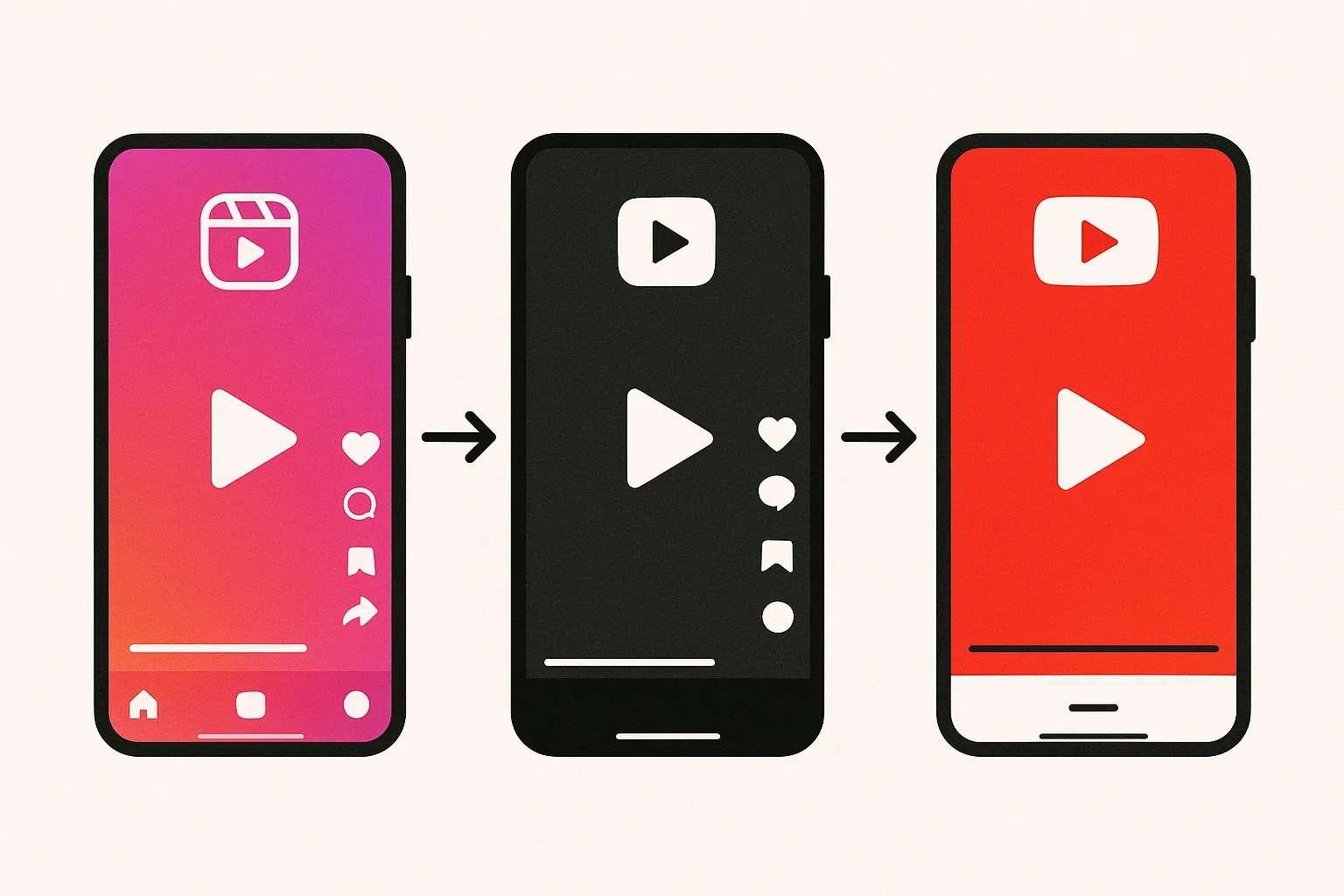
While this guide focuses on TikTok specifically, creators who distribute their content across multiple platforms often see compounding benefits. A video that performs well on TikTok can be repurposed for Instagram Reels and YouTube Shorts, tripling your content's reach without tripling your production effort.
Cross-platform distribution also creates discovery loops: someone might find your content on Instagram Reels, follow you on TikTok, and become part of the engaged audience that boosts your next TikTok video's initial performance. Managing this multi-platform presence manually is time-consuming, which is why many creators use scheduling tools like cross-post to publish across platforms simultaneously while maintaining consistent posting schedules.
When repurposing TikTok content for other platforms, remember to export watermark-free versions. Instagram and YouTube both penalize content that carries TikTok's watermark, which can significantly reduce distribution on those platforms.
What Common Mistakes Prevent TikTok Videos from Going Viral?
Understanding what to do is only half the equation. Avoiding common mistakes is equally important for maximizing your viral potential:
- Slow starts. Every second of throat-clearing, introduction, or logo animation at the beginning of your video is costing you viewers. Get to the hook immediately.
- Overproduction. Highly polished, commercial-quality production can actually hurt performance on TikTok because it signals "advertisement" to viewers. Authentic, slightly raw-looking content often outperforms studio-quality production because it feels genuine and relatable.
- Ignoring analytics. Posting without reviewing your performance data is like driving with your eyes closed. Every video generates data that should inform your next video.
- Inconsistent posting. Going silent for weeks and then posting a burst of content confuses the algorithm and your audience. Consistent, predictable publishing is far more effective.
- Chasing trends blindly. Using every trending sound regardless of relevance to your niche makes your profile feel scattered and prevents the algorithm from understanding who your content is for.
- Negative engagement bait. Deliberately provoking negative reactions might generate comments, but TikTok's algorithm has become increasingly sophisticated at distinguishing positive engagement from negative engagement. Rage-bait can suppress your distribution over time.
- Copying instead of adapting. Recreating someone else's viral video frame-for-frame rarely works. The audience has already seen it. Instead, take the underlying concept and filter it through your unique perspective and niche.
- Giving up too early. Most creators who eventually go viral had dozens or hundreds of low-performing videos first. The learning period is real. If you quit after 20 videos, you are quitting right when you were starting to develop the intuition that leads to breakout content.
How Do You Collaborate with Other Creators to Boost Virality?
Collaborations are a powerful but underutilized strategy for going viral on TikTok. When two creators collaborate, their audiences cross-pollinate, which introduces your content to an entirely new viewer base. TikTok's algorithm also tends to give collaborative content a distribution boost because it drives engagement from multiple audience segments simultaneously.
Effective collaboration strategies include:
- Duets and stitches. These are TikTok's built-in collaboration features. React to, build upon, or respond to another creator's video. When the original creator has a large audience, your duet or stitch gets exposure to their followers.
- Joint live streams. Going live together creates real-time engagement from both audiences and often results in follower exchanges.
- Challenge creation. Create a challenge or format that other creators can participate in. If the format catches on, your original video gets credited and resurfaces repeatedly.
- Comment-section collaboration. Actively engaging in the comment sections of creators in your niche increases your visibility to their audience. Thoughtful, valuable comments often drive profile visits and follows.
How Do You Convert Viral Views into Long-Term Growth?
A viral video is only valuable if it converts viewers into followers, and followers into an engaged community. Here is how to capitalize on viral moments when they happen:
- Have a clear profile. When a video goes viral, thousands of people will visit your profile. Your bio should clearly communicate what you create and why they should follow. Your recent videos should be consistent with the content that went viral.
- Pin your best content. TikTok allows you to pin up to three videos at the top of your profile. Pin videos that represent your best work and the topics you cover most consistently.
- Post immediately after going viral. When the algorithm is pushing one of your videos, it tends to give your subsequent posts a boost as well. Have content ready to publish within 24 hours of a viral hit.
- Engage with every comment. Responding to comments on a viral video keeps the engagement metrics climbing and shows new followers that you are active and accessible.
- Create follow-up content. If a specific video resonates, create a series. "Part 2," sequel content, and deeper dives into the same topic capitalize on the audience interest your viral video identified.
Frequently Asked Questions
How many views does a TikTok video need to be considered viral?
There is no universal threshold, but generally a video is considered viral when it significantly exceeds your account's average view count and enters TikTok's broader distribution tiers. For a new account, 100,000 views might constitute virality. For an established creator with a large following, the bar might be 1 million or more. What matters more than the absolute number is the ratio of views to your typical performance and whether the video triggered cascading distribution through multiple audience tiers.
Can you go viral on TikTok with a brand new account?
Yes. TikTok is one of the few platforms where brand new accounts can genuinely go viral. Because the algorithm prioritizes content engagement signals over follower count, a compelling video from a zero-follower account can reach millions of viewers. In fact, some creators report that their first few videos received disproportionately strong distribution, suggesting TikTok may give new accounts a temporary boost to evaluate their content quality.
Does posting time really affect whether a TikTok goes viral?
Posting time influences your initial engagement, which affects whether TikTok pushes your video to larger audiences. However, posting time is a secondary factor compared to content quality. A great video posted at a suboptimal time will still outperform a mediocre video posted at the perfect time. That said, posting when your audience is most active gives your video the best chance of strong initial performance, which can make the difference between moderate success and viral distribution.
How long does it take for a TikTok video to go viral?
Most viral TikTok videos gain significant traction within the first 24-48 hours of posting. However, TikTok is unique in that videos can go viral days, weeks, or even months after posting. The algorithm continuously re-evaluates content and can suddenly push an older video to new audiences if it identifies a relevant interest group. This delayed virality is one reason why you should never delete underperforming videos.
Should you buy TikTok followers or views to help go viral?
No. Purchased followers and views do not generate genuine engagement signals. TikTok's algorithm relies on real behavioral data — watch-through rates, shares, comments, and saves — to determine distribution. Fake engagement does not produce these signals and can actually harm your account by creating a mismatch between your follower count and your engagement rate, which the algorithm interprets as a negative quality signal.
What is the best niche for going viral on TikTok in 2026?
There is no single "best" niche because virality potential exists in every category. However, niches that combine education with entertainment (edutainment), personal finance, health and wellness, technology reviews, and cooking continue to produce consistently high-performing content. The best niche for you is one where you have genuine expertise or passion, because authenticity is increasingly important to both audiences and the algorithm.
How do TikTok's algorithm changes in 2026 affect viral strategy?
TikTok's 2026 algorithm places even greater emphasis on watch-through rate and content quality over engagement volume. The platform has also improved its ability to detect and suppress engagement bait, rage bait, and low-quality content that generates clicks without delivering value. The overall direction is toward rewarding content that genuinely serves viewers, which means creators focused on delivering real value are in a stronger position than those relying on algorithmic tricks.
Is it worth using TikTok ads to help a video go viral?
TikTok's Promote feature can boost a video's distribution, but a promoted video is not the same as a viral video. Paid distribution stops when the budget runs out, while organic virality can sustain itself for days or weeks. That said, Promote can be useful for giving a strong-performing video an additional push that tips it into broader organic distribution. The best approach is to use Promote selectively on videos that are already showing strong organic engagement signals, rather than trying to force virality on content that is not resonating organically.
Going viral is not guaranteed — no strategy can promise that. But by understanding what the algorithm rewards and creating content that hooks viewers, holds attention, and triggers emotional responses, you dramatically improve your odds. Make 30 videos following these principles and track your results. The data will tell you what works for your specific niche and style. And when you are ready to scale your content across multiple platforms, tools like cross-post can help you maintain the consistent publishing schedule that turns one-time viral moments into sustained growth.
Ready to simplify your social media?
Post to Instagram, YouTube, TikTok, X, Threads, Pinterest, and Facebook from one dashboard.
Get Started Free →