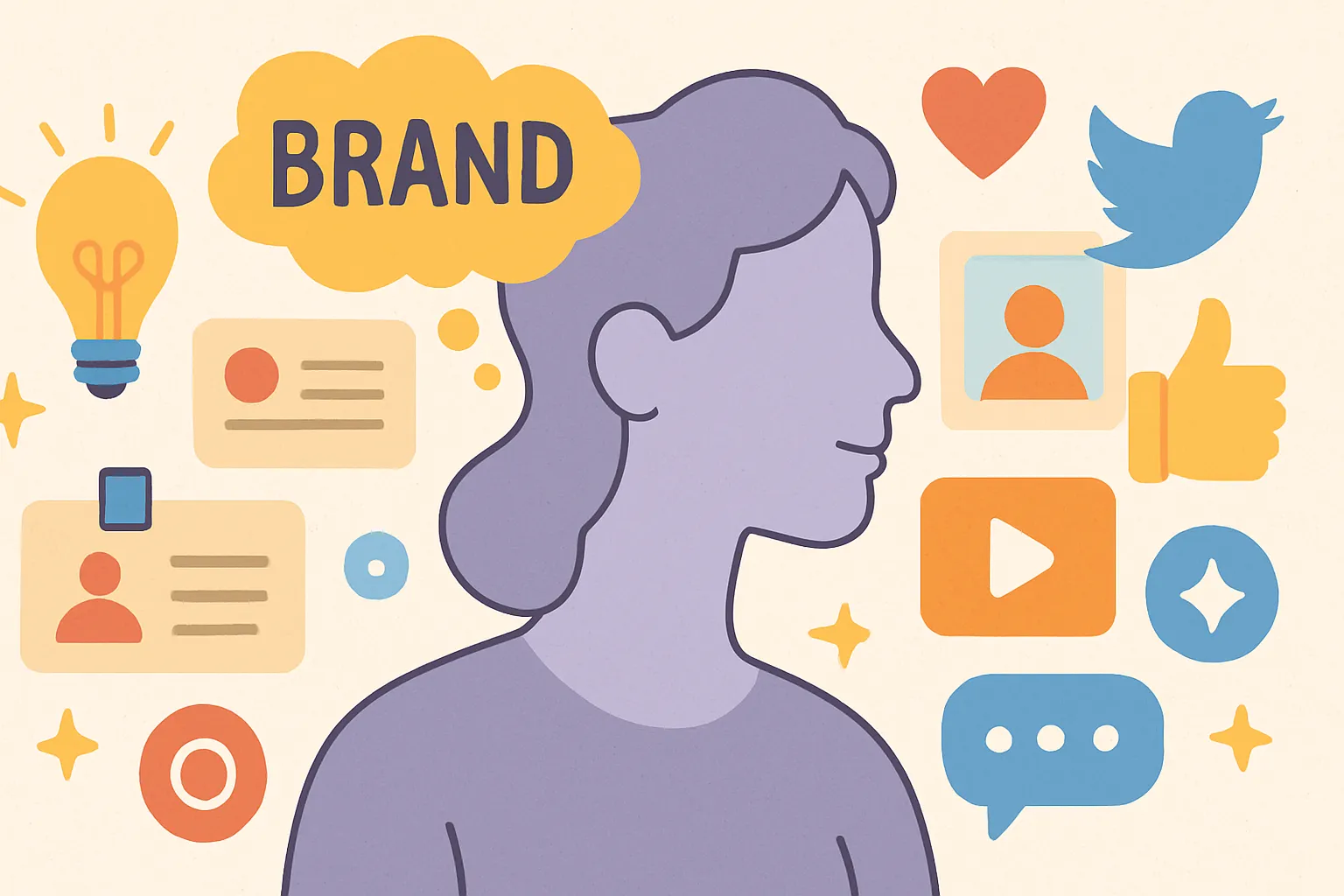
Your personal brand is what people say about you when you are not in the room. On social media, it is what people think when they see your name in their feed. A strong personal brand opens doors that cold outreach, resumes, and traditional networking cannot — job opportunities, collaborations, speaking gigs, clients, and influence in your industry. It is the compound interest of consistently showing up as a recognizable, trustworthy authority in your space.
But building a personal brand does not happen by accident. It does not happen by posting randomly three times a week and hoping people remember you. It requires intentional decisions about what you talk about, how you communicate, and who you are trying to reach. The good news is that the process is straightforward once you understand the framework — and you do not need to be famous, have a large following, or possess any special credentials to start.
This guide walks you through every step of building a personal brand on social media that is authentic, recognizable, and actually moves your career or business forward. From defining your brand foundation to mastering storytelling, choosing platforms strategically, and avoiding the mistakes that keep most people invisible, you will have a complete playbook by the end.
Key Takeaways
- A personal brand is the intersection of what you are known for, how you communicate, and what people feel about you — it is not a logo, a color palette, or a catchy bio
- Define your brand foundation first: who you are trying to reach, what you want to be known for, and what perspective makes you different from everyone else in your space
- Content pillars (3-5 recurring themes) prevent scattered posting and give your audience a clear reason to follow you while giving you a framework so you never start from a blank page
- Storytelling is the most powerful personal branding tool — origin stories, failure stories, and transformation stories build emotional connection faster than tips and advice alone
- Consistency beats intensity — three posts per week for a year always outperforms daily posting for a month followed by silence
- Engagement is not optional — the most effective personal branding happens in comments, replies, and conversations as much as in your own posts
- Start with one or two platforms and expand only after you have built a sustainable rhythm, not before
What Exactly Is a Personal Brand?
A personal brand is not a logo, a color palette, or a carefully curated Instagram grid. Those are visual elements that support a personal brand, but they are not the brand itself. A personal brand is the intersection of three things:
- What you are known for — Your expertise, your niche, the topics you consistently talk about. This is the substance of your brand. When someone describes you to a colleague, what topic do they mention?
- How you communicate — Your tone, your style, the way you present ideas. Are you formal or casual? Humorous or serious? Provocative or measured? Do you teach through frameworks, through stories, or through raw honesty?
- What people feel about you — The emotional response your content creates. Trust, inspiration, relatability, authority, warmth, edge. This is the most important dimension because people forget information but they remember how you made them feel
Every piece of content you post either reinforces or dilutes your personal brand. A post about your area of expertise reinforces it. A random meme that has nothing to do with your niche dilutes it. The goal is not to be someone you are not — it is to be intentional about which parts of yourself you put forward and how consistently you do so.
Why Does a Personal Brand Matter More Than Ever in 2026?
The landscape has shifted dramatically in the last few years. Hiring managers search candidates on LinkedIn and Instagram before making offers. Clients choose service providers based on their social media presence before ever visiting a website. Conference organizers book speakers who have visible authority and audience. Investors evaluate founders partly based on their personal brand and the trust they have built publicly.
The people who will thrive in the next decade are the ones who are known for something specific. Not known by everyone — known by the right people. A personal brand ensures that when an opportunity arises in your field, your name comes up. That is the practical value of what might otherwise sound like a vague concept.
Beyond opportunities, a personal brand also provides leverage. A freelance designer with 10,000 engaged followers who know her for brand identity work can charge significantly more than an equally skilled designer with no public presence. The brand creates perceived authority, and perceived authority commands higher rates, better projects, and more inbound interest.
How Do You Define Your Brand Foundation?
Before you post anything, answer these four foundational questions. They become your filter for every content decision going forward — what to create, what to skip, how to present your ideas, and where to invest your time.
Question 1: What Am I Uniquely Qualified to Talk About?
This does not have to be formal credentials. Your experience, your perspective, and your unique intersection of interests create your angle. A project manager who also does stand-up comedy brings a different flavor to leadership content than a former military officer who became a CEO. Neither is better — they are different, and that difference is what makes each brand distinctive.
Think about what you know that most people in your target audience do not. What have you experienced that gives you insight others lack? What questions do people already ask you for advice on? The answers to these questions point to your unique qualification.
The most common mistake here is thinking you need to be the world's foremost expert. You do not. You need to know more than your target audience. If your audience is beginners, intermediate knowledge is sufficient. If your audience is intermediate, advanced knowledge gives you authority. You are always speaking to people one or two steps behind you on the journey — never trying to compete with the top 0.1% of experts in your field.
Question 2: Who Am I Trying to Reach?
"Everyone" is not an audience. Be specific: early-career marketers, small business owners in the service industry, remote workers transitioning from corporate jobs, fitness beginners over 40, first-generation college students. The more precisely you define your audience, the more magnetic your content becomes because it feels like it was made specifically for them.
Define your ideal audience member as a specific person. Give them a name, an age range, a career stage, a set of challenges, and a set of aspirations. When you create content, you are talking to that person. This exercise sounds simple but it transforms your content from generic advice to focused, resonant communication.
Practically, having a defined audience also makes platform selection, content format decisions, and partnership opportunities much clearer. If your audience is B2B decision-makers aged 35-50, LinkedIn is your primary platform and your tone should be professional but not corporate. If your audience is creative freelancers aged 22-30, Instagram and TikTok are your arenas and your tone can be casual and personality-forward.
Question 3: What Do I Want to Be Known For?
Pick 2-3 core areas. A career coach known for negotiation advice and interview preparation. A designer known for brand identity and minimalism. A developer known for explaining complex concepts simply and for freelance business strategy. Narrower is better, especially when starting out.
The temptation is to list ten things because you are interested in ten things. Resist it. Being known for ten things is the same as being known for nothing. Your audience needs to be able to describe what you do in one sentence. If they cannot, your brand is not clear enough.
This does not mean you can never talk about other topics. It means your core 2-3 areas get 80% of your content, and everything else gets the remaining 20%. That ratio keeps your brand identity clear while allowing you to show your full personality and range.
Question 4: What Is My Point of View?
The most memorable personal brands have opinions. Not controversy for controversy's sake, but a genuine perspective that sets them apart from the consensus in their field. A financial advisor who believes everyone should start a business before investing. A fitness coach who thinks most people exercise too much, not too little. A marketing consultant who argues that email is more valuable than social media for most businesses.
Having a point of view makes people pay attention. It creates conversation. It polarizes — and polarization in the personal branding context is not negative. It means some people strongly agree with you and become loyal followers, while others disagree and move on. A brand that nobody disagrees with is a brand that nobody cares about deeply.
Write your answers to all four questions down. Print them out. Put them somewhere visible when you create content. They are not abstract exercises — they are the practical compass for every post you publish.
How Do You Build Content Pillars for Personal Branding?
Content pillars are the 3-5 recurring themes you consistently create around. They give your audience a reason to follow you and give you a framework so you never start from a blank page wondering what to post.
What Makes a Good Content Pillar?
A good content pillar has three qualities: it aligns with what you want to be known for, it provides value to your target audience, and it is broad enough to generate dozens of content ideas but specific enough to feel focused. Here is how content pillars work in practice for different types of personal brands.
Example pillars for a freelance web developer:
- Technical tutorials — How-to content demonstrating skills and building credibility. Code walkthroughs, tool comparisons, problem-solving approaches
- Freelance business lessons — Pricing strategies, client management, finding work, building a portfolio, handling difficult situations
- Industry opinions — Hot takes on tools, trends, frameworks, and practices. What is overhyped? What is underrated? What should beginners learn first?
- Behind-the-scenes — Current projects (without revealing client details), workspace setup, daily routine, tools and processes
Example pillars for a career coach:
- Job search strategy — Resume tips, interview preparation, networking approaches, salary negotiation
- Career growth — Getting promoted, managing up, building skills, navigating office politics
- Career change stories — Case studies and personal narratives about pivoting careers successfully
- Workplace culture — Opinions on management trends, remote work, work-life balance, toxic workplaces
Example pillars for a fitness content creator:
- Workout demonstrations — Exercise tutorials, form corrections, routine designs
- Nutrition made simple — Meal prep, macro basics, debunking diet myths
- Mindset and motivation — Mental barriers, consistency strategies, personal stories
- Transformation journeys — Client results, before-and-after stories, progress documentation
Every post should fit into one of your pillars. If an idea does not fit, either save it for a different context or do not post it. This discipline is what separates a personal brand from a personal diary. It feels restrictive at first, but it actually frees you — when you sit down to create, you are choosing between 3-5 defined lanes rather than staring at the infinite void of "anything."
How Do You Know If Your Pillars Are Working?
After posting consistently within your pillars for 4-6 weeks, review your analytics. Which pillar consistently generates the most engagement? Which one drives the most profile visits and follows? Which gets the most saves and shares? The data will tell you which pillars resonate most and which might need adjustment.
You may discover that one pillar dramatically outperforms the others. That is a signal — not to abandon the other pillars entirely, but to give the high-performing one more weight in your content mix. If your behind-the-scenes content consistently gets twice the engagement of your tutorial content, shift from a 25/25/25/25 split to a 40/20/20/20 split. Follow the data without abandoning your strategic framework.
How Do You Create a Visual Identity for Your Personal Brand?
Visual consistency makes you recognizable in a crowded feed. When someone scrolls past 100 posts, the ones from people they follow should be instantly identifiable. You do not need a professional designer — just a few consistent choices applied repeatedly.
- Profile photo — Use the same high-quality headshot across all platforms. This is your visual anchor. People should recognize you instantly whether they encounter you on Instagram, LinkedIn, X, YouTube, or Bluesky. A professional headshot is ideal, but a well-lit, high-resolution photo taken on a modern smartphone works perfectly. What matters is that it is clear, well-lit, and shows your face. Avoid logos, illustrations, or group photos
- Color palette — Pick 2-3 colors and use them consistently in your graphics, Stories, post templates, and any visual content. Colors create subconscious recognition. When someone sees your specific shade of blue or green in their feed, they should start to associate it with you before they even read the caption. Choose colors that reflect your brand personality — warm tones for approachable, cool tones for professional, bold tones for energetic
- Typography — Choose one or two fonts for any text-based content: carousels, quote graphics, thumbnails, Story text. Use the same fonts consistently across every piece of content. This seems minor, but typographic consistency is one of the strongest visual identity signals because it operates at a subconscious level
- Content templates — Create reusable templates for your recurring content types. A carousel template, a quote template, a tip template, a testimonial template. This simultaneously creates visual consistency, speeds up content creation significantly, and ensures your posts look polished even when you create them quickly
- Photo and video style — Develop a consistent aesthetic for your photos and videos. This might mean always using natural light, always filming against the same background, always using the same filter or color grade, or always starting videos from the same camera angle. The specifics matter less than the consistency
Consistency across platforms matters. When someone finds you on Instagram and then looks you up on LinkedIn, the visual identity should be immediately recognizable as the same person. This cross-platform recognition is essential because your audience does not live on one platform — they will encounter you in multiple places, and your visual consistency should make you instantly identifiable everywhere.
How Detailed Does Your Visual Identity Need to Be?
When you are starting out, keep it simple. A consistent profile photo, two brand colors, one font, and one content template are enough to create visual recognition. As your brand grows, you can develop a more comprehensive visual system. The biggest mistake is spending weeks perfecting a visual identity before publishing any content. Your visual identity should be "good enough to start" and refined over time based on what works.
How Do You Master Storytelling for Personal Branding?
Storytelling is the most powerful tool for personal branding, and it is dramatically underutilized by most creators. Facts inform, but stories connect. Data convinces, but stories move people to action. The personal brands that grow fastest are the ones that share authentic narratives, not just tips, frameworks, and advice.
Think about the personal brands you follow and admire. You probably remember their stories — the career setback they overcame, the moment they decided to change directions, the embarrassing failure that taught them everything — more vividly than any specific tip they shared. That is because human brains are wired for narrative. We retain stories 22 times better than facts alone, according to research from Stanford University.
What Types of Stories Build Your Brand?
- Origin stories — How you got started, why you chose your field, the moment that changed your direction. These create emotional connection and give context to your expertise. Your origin story is one of your most valuable brand assets because nobody else has it. Every time you share it (or a new facet of it), you deepen the audience's connection to you and make your expertise feel earned rather than assumed
- Failure stories — What went wrong and what you learned. Vulnerability builds trust faster than perfection. People remember the person who shared their worst day, their biggest mistake, or their most embarrassing moment more than the one who only shares wins. Failure stories also demonstrate growth and resilience, which are qualities audiences deeply admire
- Transformation stories — Before and after. Where you were versus where you are now. These inspire and demonstrate credibility simultaneously. A career coach who went from being laid off and broke to running a successful practice has a transformation story that validates their expertise more powerfully than any certification
- Client or customer stories — How you helped someone achieve a result. This is social proof delivered as narrative. Instead of saying "I help people get promoted," tell the story of a specific client who went from being overlooked to landing a VP role. Names can be changed, but the details should be real
- Daily life stories — Behind-the-scenes moments, routine glimpses, and in-the-moment observations that humanize you. These do not need to be dramatic — a story about your morning routine, a frustrating client call (without naming them), or a random lesson from your commute can all reinforce your brand if they connect to your pillars
- Contrarian stories — Times you went against conventional wisdom and it paid off (or did not). These establish your unique point of view and signal intellectual independence. "Everyone told me to do X, so I did Y instead. Here is what happened." This format is magnetic because it promises a divergence from the expected
How Do You Structure a Story for Social Media?
Social media storytelling follows a compressed structure. You do not have the luxury of a slow build. Here is the framework that works across platforms:
- Hook — The opening line or visual that stops the scroll. This should create curiosity, tension, or immediate relevance. "I almost quit my career last Tuesday" is a hook. "Here are some thoughts on my career" is not
- Context — The situation, the setting, the stakes. Give just enough background for the audience to understand what is happening without dragging the pace. One or two sentences maximum
- Conflict or tension — What went wrong, what the challenge was, what was at stake. Every good story has a moment where the outcome is uncertain. This is what keeps people reading or watching
- Resolution — What happened? How did it resolve? What did you do? Be specific and honest. If the outcome was messy or incomplete, say so. Perfect resolutions feel fake
- Lesson or takeaway — What did you learn? What should the audience take from this? This connects the story back to your content pillars and brand. It transforms a personal anecdote into valuable content
Authenticity does not mean sharing everything. It means being genuinely yourself in the things you choose to share. You can be authentic and still have boundaries. In fact, having boundaries about what you share and what you keep private is a sign of a mature personal brand, not a disingenuous one.
How Do You Stay Consistent Without Burning Out?
Consistency is the non-negotiable of personal branding. An account that posts three times a week for a year will always outperform one that posts daily for a month and then disappears. The algorithm rewards consistency because it signals reliability. Your audience rewards consistency because it builds the habit of expecting and looking for your content. But consistency does not mean posting every single day no matter what — it means showing up at a sustainable frequency indefinitely.
What Is the Right Posting Frequency for Personal Branding?
Three posts per week is the minimum for building a visible personal brand. Five per week is optimal if you can sustain it. Daily posting accelerates growth but is unsustainable for most people long-term. The specific number matters less than the regularity — posting three times per week every single week is dramatically more effective than posting seven times one week, twice the next, and zero the week after.
| Posting Frequency | Expected Growth Pace | Sustainability | Best For |
|---|---|---|---|
| 3 times per week | Steady, gradual growth | High — sustainable for most people | People with full-time jobs or other primary commitments |
| 5 times per week | Moderate-fast growth | Moderate — requires commitment but manageable with batching | Creators who want to build a brand as a primary professional goal |
| Daily | Fast growth | Low — most people burn out within 2-3 months | Only if you have systems in place and content creation is your primary focus |
| 2 or fewer per week | Very slow growth | High — but progress is minimal | Not recommended for active brand building |
What Are the Best Strategies for Maintaining Consistency?
- Set a sustainable frequency and commit to it publicly — Telling your audience "I post every Tuesday, Thursday, and Saturday" creates accountability. It also trains your audience to expect and look for your content on those days
- Batch your content — Dedicate one session per week to creating and scheduling your content. This turns a daily chore into a weekly task and eliminates the daily decision fatigue of "what should I post today?" Content batching is the single most impactful operational decision you can make for consistency
- Use templates — Having content templates reduces the friction of creation. You are filling in a proven framework, not starting from scratch every time. Templates for carousels, text posts, video scripts, and Stories cut creation time dramatically
- Schedule across platforms — Use a cross-posting tool like cross-post so you can maintain presence on multiple platforms without creating separate content for each one. One creation session, multiple platforms, automated scheduling
- Build a content bank — During your most creative periods, create more content than you need and save the extras. During low-energy weeks (and they will come), pull from the bank instead of skipping posts entirely. Having 5-10 backup posts ready to schedule is one of the best consistency insurance policies
- Create recurring formats — A "Monday Motivation" post, a "Friday FAQ" answering audience questions, a weekly industry news roundup. Recurring formats reduce ideation effort because the structure is predetermined — you just need to fill it with fresh content each week
How Do You Engage Authentically to Build Your Personal Brand?
Building a personal brand is not just about broadcasting — it is about participating in conversations. The most effective personal branding happens in comments, replies, and DMs as much as in your own posts. Many people focus exclusively on their own content and neglect engagement, but engagement is where relationships are built, and relationships are what transform followers into advocates.
What Does Strategic Engagement Look Like?
- Comment on other creators' content thoughtfully — Thoughtful comments on popular posts in your niche put you in front of new audiences. Not "Great post!" or a fire emoji — genuine additions to the conversation that demonstrate your expertise or perspective. A thoughtful comment on a post with 100,000 views is seen by thousands of people who might visit your profile. This is one of the most underutilized growth tactics in personal branding
- Reply to every comment on your posts — Especially when your account is small. This builds loyalty and signals to the algorithm that your content drives conversation, which increases distribution. A comment section where the creator actively participates becomes a destination, not an afterthought. People return to posts where they know the creator will respond
- Join and contribute to communities in your niche — Participate actively in Facebook groups, subreddits, Discord servers, LinkedIn groups, or Bluesky feeds where your target audience gathers. Provide value without self-promoting (the promotion comes naturally when people check your profile after seeing your helpful contributions). Being a respected voice in a community is more valuable than thousands of passive followers
- Collaborate with peers — Guest appearances on podcasts, co-created content, joint live sessions, or shoutouts from other creators in your space accelerate growth significantly. Collaborations expose you to an entirely new audience that already trusts the person recommending you
- Respond to DMs with substance — When someone messages you with a question, a compliment, or a request for advice, respond thoughtfully. These one-on-one interactions create your most loyal followers. Someone who received a helpful DM from you will engage with every post you publish for months
- Engage before and after you post — Spend 15 minutes engaging with other people's content right before and right after you publish your own posts. This increases the likelihood that your post gets early engagement (because the people you just interacted with are more likely to see and engage with your content), which drives algorithmic distribution
How Much Time Should You Spend on Engagement?
A good rule of thumb is to spend equal time creating content and engaging with others. If you spend 3 hours per week creating content, spend at least 3 hours per week engaging — commenting on others' posts, responding to comments on yours, participating in communities, and having conversations in DMs. Many creators who struggle with growth are spending 90% of their time creating and 10% engaging. Flipping that ratio often produces better results than improving the content itself.
How Do You Choose the Right Platforms for Your Personal Brand?
You do not need to be everywhere. Trying to build a presence on six platforms simultaneously with no team is a recipe for burnout and mediocrity on all of them. Pick platforms based on where your audience spends time and what content format plays to your strengths.
| Platform | Best For | Content Strengths | Audience Profile | Personal Branding Advantages |
|---|---|---|---|---|
| Professional personal branding, B2B networking, thought leadership | Long-form posts, articles, document carousels, newsletters | Professionals, decision-makers, 25-55 | Highest per-post visibility for professional content; comments drive significant reach | |
| Visual personal brands: designers, coaches, lifestyle, creative professionals | Reels, carousels, Stories, visual aesthetics | Broad demographics, skews 18-40 | Strong visual identity platform; carousels excellent for educational content | |
| TikTok | Reaching new audiences quickly, educational content with personality | Short-form video with strong hooks and personality | Skews younger (18-34) but broadening | Unmatched organic reach for new creators; personality-driven content thrives |
| X/Twitter | Building authority through ideas, real-time commentary | Written takes, threads, conversations | Media professionals, tech, finance, politics | Ideas spread fast; threading allows depth; engagement with thought leaders is accessible |
| YouTube | Deep expertise, long-form education, building strong audience relationships | Long-form video, Shorts, tutorials, vlogs | Broadest demographic range | Content has the longest shelf life of any platform; search-driven discovery |
| Bluesky | Text-based thought leadership, early-mover opportunity | Text posts, conversations, community building | Tech-forward, media, growing rapidly | High organic reach due to lower competition; engaged community |
| Threads | Casual conversation, extending Instagram brand presence | Text posts, casual commentary, community engagement | Instagram users, growing user base | Easy activation if you already have Instagram presence; conversational tone |
| Visual inspiration, evergreen content, driving traffic | Pins, infographics, tutorials, product showcases | High purchase intent, 25-45 | Content has extremely long shelf life; drives website traffic effectively |
What Is the Best Platform Strategy for Personal Branding?
Start with one primary platform and one secondary platform. Your primary platform is where you invest the most creative effort and build your deepest community. Your secondary platform is where you adapt and cross-post your best content to reach a different audience segment.
After 3-6 months on your primary platform — once you have a consistent rhythm, a growing audience, and content that resonates — expand to a third platform. Using a tool like cross-post makes this expansion manageable because you can publish to additional platforms without creating entirely new content for each one.
Choose your primary platform based on these factors:
- Where does your target audience spend the most time? — If you are targeting B2B professionals, LinkedIn is likely your primary. If you are targeting creative millennials, Instagram. If you are targeting Gen Z, TikTok
- What content format plays to your strengths? — If you are a strong writer, text-first platforms (LinkedIn, X, Bluesky) will feel natural. If you are comfortable on camera, video platforms (TikTok, YouTube, Instagram) will give you an advantage. If you are a visual designer, Instagram and Pinterest leverage your skills
- Where can you be consistent? — The platform you will actually post on three times per week is better than the platform you should theoretically be on but will abandon after two weeks
What Are the Most Common Personal Branding Mistakes?
Understanding what to avoid is just as important as knowing what to do. These are the mistakes that keep personal brands invisible, stagnant, or forgettable.
- Trying to appeal to everyone — A brand for everyone resonates with no one. Niche down. The more specific your positioning, the more magnetic your brand becomes. "I help people with marketing" attracts nobody. "I help solo consultants land their first five clients through LinkedIn content" attracts exactly the right people
- Copying someone else's style — Draw inspiration from others, but your brand has to sound like you. If your content feels like an imitation of someone with a bigger following, your audience will sense it and disengage. Study what works about other brands, but filter everything through your own voice, perspective, and personality
- Only sharing wins — Perfection is boring and unrelatable. If every post is a humble brag or a celebration of success, your audience will eventually tune out. Share the process, the struggles, the lessons, the failures. That is what people genuinely connect with. A feed full of wins creates distance. A feed that includes setbacks creates intimacy
- Inconsistency in posting — Posting daily for two weeks, then vanishing for a month, then posting again randomly. The algorithm and your audience both penalize inconsistency. The algorithm deprioritizes your content because it cannot predict your behavior. Your audience forgets about you and unfollows during the gaps. Pick a frequency you can maintain and stick to it
- Avoiding video entirely — Video is the highest-engagement format on every major platform. You do not need to be polished — just present. Start with short-form video (15-30 seconds) and get comfortable over time. The creators who grow fastest in personal branding are the ones who are willing to show their face on camera, even imperfectly
- Neglecting your bio and profile — Your bio is your elevator pitch. When someone visits your profile, they decide within seconds whether to follow you. A vague bio like "Passionate about life, learning, and growth" tells them nothing. A clear bio like "Helping freelance designers double their rates | 12 years in brand strategy | Subscribe to my weekly newsletter" tells them exactly what to expect
- Confusing personal branding with self-promotion — Personal branding is not talking about how great you are. It is consistently demonstrating your expertise, sharing your perspective, and providing value. The promotion happens implicitly — people see your knowledge and come to you. The brands that feel overly self-promotional are the ones that constantly ask for attention without providing value first
- Waiting until you are "ready" — Your personal brand will not be perfect on day one. It will be imperfect, and that is fine. Waiting until you have the perfect logo, perfect bio, perfect content plan, and perfect visual identity is procrastination disguised as preparation. Start publishing, learn from the feedback, and refine as you go. The best personal brands were built iteratively, not planned into existence
- Not tracking what works — If you do not review your analytics, you are making content decisions blindly. Spend 15 minutes per week reviewing which posts performed well and which did not. Look for patterns in topics, formats, hooks, and posting times. Let data inform your strategy alongside your instinct
How Do You Monetize a Personal Brand?
A personal brand becomes an economic asset once you have built enough authority and audience trust. The monetization path depends on your industry, your goals, and your audience, but the common revenue streams for personal brands include:
- Consulting and services — Your personal brand generates inbound leads for your professional services. This is the most common and direct monetization path. A personal brand in leadership coaching leads to coaching clients. A brand in web development leads to freelance projects
- Speaking engagements — Conference organizers and event planners seek speakers with visible authority and audience. A strong personal brand is the primary qualification for paid speaking opportunities
- Sponsorships and brand partnerships — Companies pay to be associated with personal brands that have engaged audiences in their target market. Micro-influencers (5,000-50,000 followers) with high engagement rates often earn more per follower than creators with large but passive audiences
- Digital products — Courses, templates, guides, and memberships that package your expertise into scalable products. Your personal brand drives the trust needed for people to buy these products
- Community and memberships — Paid communities where members access exclusive content, networking, or direct access to you. Personal brands with strong community engagement convert well to membership models
- Career advancement — Not all personal brand monetization is direct revenue. A strong personal brand leads to better job offers, higher salaries, board positions, advisory roles, and opportunities that would not exist without public visibility
When Should You Start Thinking About Monetization?
Build the brand first. Monetize second. Most creators try to monetize too early — before they have the audience trust and engagement necessary for any revenue model to work. A general guideline: focus exclusively on value creation and audience building for the first 6-12 months. Once you have at least 2,000-5,000 engaged followers who regularly interact with your content, you have the foundation to introduce monetization without damaging your brand.
How Do You Measure Personal Brand Growth?
Growth in personal branding is not measured solely by follower count. Track these metrics to understand whether your brand is actually growing in the ways that matter:
- Inbound opportunities — Are you receiving more DMs, emails, and inquiries from people who discovered you through your content? This is the ultimate measure of brand effectiveness. More inbound means your brand is working
- Engagement rate — Is the percentage of your audience that interacts with your content stable or growing? A growing engagement rate means your content quality is increasing relative to your audience size
- Content saves and shares — These indicate that people find your content valuable enough to revisit or recommend to others. High save and share rates are stronger growth signals than likes
- Profile visit to follow conversion — What percentage of people who visit your profile decide to follow? If this number is low, your bio, profile photo, or content grid may not clearly communicate your brand
- Cross-platform recognition — Are people finding you on one platform and following you on another? When someone says "I follow you on LinkedIn and I just found you on Instagram too," your brand is working across platforms
- Qualitative feedback — Pay attention to what people say in comments and DMs. "I always learn something from your posts" or "You're the first person I think of when someone asks about X" are qualitative signals that your brand positioning is landing
Getting Started: Your First-Week Action Plan
You do not need everything figured out to start. Perfectionism is the enemy of personal branding. Here is your first-week action plan to move from thinking about your brand to actually building it:
- Day 1: Answer the four brand foundation questions (30 minutes) — What am I uniquely qualified to talk about? Who am I trying to reach? What do I want to be known for? What is my point of view?
- Day 2: Define your 3-5 content pillars (30 minutes) — Write them down with brief descriptions and 3-5 content ideas under each pillar
- Day 3: Update your profile (45 minutes) — Profile photo, bio, links, and any visual elements on your primary platform. Make it immediately clear what your brand is about
- Day 4: Create and publish your first pillar content (60-90 minutes) — Write a post, record a video, or design a carousel that fits one of your pillars. Publish it. Do not wait until it is perfect
- Day 5: Engage with 15 posts in your niche (30 minutes) — Leave thoughtful comments on 15 posts from creators and accounts in your target space. Introduce yourself to the community
- Day 6: Create your second post (60 minutes) — Choose a different pillar from Day 4 to show range
- Day 7: Plan the next two weeks (45 minutes) — Map out your next 6-8 posts across your pillars. Schedule them using a scheduling tool so they publish automatically. Set up your batching rhythm for the coming weeks
Frequently Asked Questions
How Long Does It Take to Build a Personal Brand on Social Media?
Expect 6-12 months of consistent effort before your personal brand produces tangible results like inbound opportunities, speaking invitations, or sponsorship interest. The first 3 months are the hardest because growth is slow and feedback is minimal. Most people quit during this period. The ones who persist through the initial quiet phase are the ones who build recognizable brands. After 12 months of consistent posting, engagement, and refinement, the compound effect of your efforts becomes visible and accelerates.
Can You Build a Personal Brand Without Showing Your Face?
Yes, but it is significantly harder. The strongest personal brands have a face attached because humans are wired to connect with other humans, not with logos or anonymous accounts. That said, text-based personal brands on LinkedIn, X, and Bluesky can be effective without video. Graphic-heavy brands on Instagram and Pinterest can work with curated visuals and strong captions. If showing your face on video is a barrier to starting, start without it — but plan to gradually introduce face-to-camera content as you gain confidence.
What If I Do Not Have Any Special Expertise?
Everyone has expertise in something. You may not recognize it because you compare yourself to the top experts in a field. But if you have worked in an industry for 3 or more years, navigated a specific life challenge, developed a skill through dedicated practice, or learned something through extensive personal experience, you have expertise that others will find valuable. The "one chapter ahead" principle applies: you only need to be one step ahead of your target audience, not the leading global authority.
Should I Use My Real Name or a Brand Name?
For personal branding, use your real name in almost all cases. Your name is your brand. It is searchable, memorable, and authentic. Brand names or pseudonyms create a barrier between you and your audience. The exception is if your real name is extremely common and difficult to own in search results, or if you have privacy concerns that require separation between your professional brand and personal life. Even then, consider using your first name with a descriptor ("Sarah Designs" or "Jake Talks Finance") rather than a completely disconnected brand name.
How Do I Balance Personal Content With Professional Content?
The ratio depends on your goals and platform. On LinkedIn, 80% professional and 20% personal is typical. On Instagram and TikTok, a 60/40 or even 50/50 split works well because those platforms reward relatability and personality. The personal content should still connect to your brand — a post about your morning routine is personal, but if you are a productivity coach, it ties back to your pillar. A post about your dog is personal and off-pillar, which is fine in moderation but should not dominate your feed.
What If My Niche Already Has Established Personal Brands?
Good — that proves there is demand. Competition validates your niche. The personal brand space is not winner-takes-all. The career coach with 200,000 followers is not serving every person who needs career advice. Their style, approach, personality, and perspective resonate with some people but not all. Your job is to find the segment of the audience that your unique combination of expertise, personality, and perspective serves best. Differentiation, not domination, is the goal.
How Do I Recover From a Personal Branding Mistake?
Everyone makes mistakes — a post that landed poorly, a take that was wrong, a period of inconsistency. The recovery is almost always the same: acknowledge it, learn from it, and move forward. If the mistake was a specific post, you can address it directly with a follow-up explaining your thinking and what you learned. If the mistake was inconsistency, simply start posting again without making excuses. Your audience is far more forgiving than you think, and the algorithm has a short memory. The worst response to a mistake is to go silent — that compounds the problem.
Is Personal Branding Worth the Time Investment?
If you are building a career, growing a business, or positioning yourself for opportunities, the answer is unequivocally yes. A strong personal brand is the single highest-ROI professional investment you can make because it compounds over time and benefits every aspect of your career simultaneously — better job offers, more client inquiries, speaking opportunities, partnership invitations, media features, and influence in your field. The time investment is typically 5-10 hours per week, and the returns accelerate the longer you sustain the effort.
The Bottom Line
Your personal brand will not be perfect on day one. It will evolve as you create more content, get feedback, and refine your voice. The most important step is the first one — just start showing up. Define your foundation, choose your pillars, pick a platform, and publish your first post. Then do it again. And again. And again.
The personal brands you admire today all started with a single awkward post. They became recognizable and influential through the unglamorous work of showing up consistently, providing value, engaging with their community, and refining their message over months and years. You are capable of the same — and the best time to start was a year ago. The second best time is today.
Ready to simplify your social media?
Post to Instagram, YouTube, TikTok, X, Threads, Pinterest, and Facebook from one dashboard.
Get Started Free →